
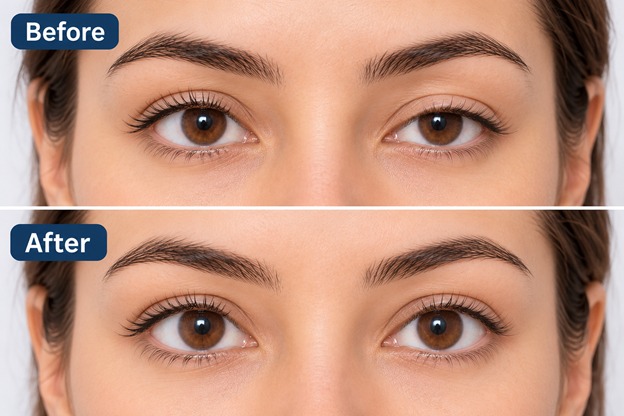
Have you ever looked at a photograph of yourself and noticed that one eye appears slightly smaller than the other? Perhaps one eyelid looks heavier, or you have noticed that one eyebrow sits a little higher.
If so, you are certainly not alone.
Very few people have perfectly symmetrical faces. Small differences between our eyes, eyebrows, and eyelids are completely normal and are often part of what makes our appearance unique.
However, for some individuals, eyelid asymmetry is more noticeable. One eyelid may droop over the eye, the skin folds may look different, or one eye may appear more open than the other.
These differences can become more apparent with age, although some people have had them for as long as they can remember.
Patients researching Eyelid asymmetry correction in Cape Town often want to know whether surgery can improve these differences and whether both eyes can be made to look more balanced.
The answer depends on what is causing the asymmetry.
In some cases, excess skin is responsible. In others, the position of the eyebrow, weakness of the eyelid-lifting muscle, or natural differences in facial anatomy may play a role.
Understanding the cause is essential because not all uneven eyelids require the same treatment.
What Causes Asymmetrical or Uneven Eyelids?
There are several reasons why one eyelid may look different from the other.
Some are simply normal variations in facial anatomy, while others may develop gradually or result from an underlying medical condition.
Natural Facial Differences
Most of us have small differences between the left and right sides of our faces.
One eyebrow may sit slightly higher, one eyelid crease may be deeper, or the skin around one eye may fold differently.
These differences are often present from a young age and may become more noticeable as we get older.
In many cases, they are completely harmless and do not require treatment.
Ageing and Changes in Skin Elasticity
As we age, the skin gradually loses some of its natural firmness.
This can cause the upper eyelids to become heavier or develop loose folds of skin.
Sometimes these changes happen more noticeably on one side than the other.
For example, someone may have Uneven upper eyelids because the skin above one eye has become more lax.
The eyebrows may also change position over time, contributing to differences between the two sides.
Ptosis: A Drooping Upper Eyelid
Ptosis is a condition in which the upper eyelid margin sits lower than normal.
It may affect one or both eyes.
In some cases, the muscle responsible for lifting the eyelid becomes weakened or its supporting tendon stretches.
A person may notice one eyelid lower than the other, particularly when looking straight ahead.
If the eyelid droops significantly, it may also interfere with vision.
Ptosis is different from excess upper eyelid skin and often requires a different type of surgery.
Differences in Eyebrow Position
The eyebrows play an important role in how our eyelids look.
If one eyebrow sits lower, it can make the corresponding upper eyelid appear heavier.
Some people also unconsciously lift one eyebrow to compensate for a drooping eyelid.
This may make the asymmetry more noticeable, particularly in photographs.
Previous Surgery or Injury
Injuries, facial trauma, or previous eyelid surgery may affect the position and shape of the eyelids.
Scar tissue or changes to the supporting structures can sometimes create visible differences between the eyes.
Medical or Neurological Conditions
Certain medical conditions can cause eyelid drooping.
For example, some muscular or neurological conditions affect the ability to raise the eyelids normally.
Sudden eyelid drooping should never be dismissed as a cosmetic concern.
If it develops unexpectedly, particularly with double vision, unequal pupils, a severe headache, or weakness, urgent medical assessment is necessary.
How Can Eyelid Asymmetry Affect Facial Appearance?
Our eyes play a central role in facial expression.
Even a small difference between the eyelids can influence how the face appears.
For example, one eye may look more open while the other appears slightly hooded.
Some people notice that one eyelid crease is clearly visible, while the other is partially hidden by loose skin.
Others may have an eyebrow that naturally sits higher, creating the impression that the eyes are uneven.
Under-eye bags can also differ between the two sides.
One lower eyelid may have more noticeable fullness or a deeper hollow, making the area appear less balanced.
These differences are not necessarily a medical problem.
In fact, perfect symmetry is unusual, and subtle variations are part of normal human anatomy.
However, when asymmetry becomes more pronounced, some individuals may feel self-conscious about their appearance.
It is important to remember that the apparent size and shape of the eyes are influenced by more than the eyelids alone.
Eyebrow position, cheek contours, bone structure, and the position of the eyes all contribute to facial balance.
For this reason, Eyelid asymmetry correction should begin with an assessment of the entire eye area rather than focusing on only one visible difference.
Can Eyelid Surgery Correct Uneven Eyelids?
This is one of the most common questions patients ask.
In many cases, eyelid surgery can improve certain types of asymmetry, but the appropriate procedure depends on the cause.
Asymmetrical eyelids surgery is not one specific operation.
Instead, it refers to surgical treatment intended to improve differences in eyelid height, skin distribution, contour, or position.
For example, if one upper eyelid has considerably more excess skin than the other, upper blepharoplasty may help improve the balance between the two sides.
However, if the actual eyelid margin is drooping because of ptosis, removing excess skin alone may not solve the problem.
In this situation, the surgeon may need to address the eyelid-lifting mechanism.
Similarly, if one eyebrow sits significantly lower, an operation on the eyelid alone may not produce the desired improvement.
Sometimes more than one issue contributes to the appearance.
A patient may have excess upper eyelid skin together with ptosis or differences in eyebrow position.
This is why a careful examination is so important.
The aim of surgery is usually to achieve better balance while maintaining natural facial features and healthy eyelid function.
Perfect symmetry cannot be guaranteed, and small differences may remain even after a successful procedure.
What Treatment Options Are Available for Eyelid Asymmetry?
There are several options available, depending on what is causing the uneven appearance.
Upper Blepharoplasty
Upper blepharoplasty is commonly performed to remove excess upper eyelid skin.
It may be suitable when one eyelid looks heavier because it has more loose skin than the other.
During surgery, the surgeon carefully plans the amount of skin to remove from each side.
The amount removed may differ between the two eyelids because the objective is to improve balance rather than remove identical amounts of tissue.
Ptosis Repair
If the eyelid margin itself sits too low, ptosis repair may be recommended.
This procedure addresses the structures responsible for lifting the eyelid.
For example, a patient whose left upper eyelid droops more noticeably than the right may require correction of the eyelid-lifting mechanism.
The exact surgical technique depends on the severity of the drooping and how well the eyelid muscle functions.
Lower Blepharoplasty
Uneven lower eyelids may be caused by differences in the fat deposits beneath the eyes.
In selected cases, lower blepharoplasty may help improve the contour by adjusting or repositioning fat.
The surgeon considers the anatomy of each lower eyelid separately to avoid unnecessary fat removal or changes in eyelid position.
Brow Surgery
When eyebrow position contributes significantly to asymmetry, brow surgery may be considered.
However, changing the eyebrow position is not always necessary or desirable.
The decision depends on the patient’s natural anatomy and treatment goals.
Combined Procedures
Some patients may benefit from more than one procedure.
For example, someone with excess upper eyelid skin and true ptosis may require both blepharoplasty and ptosis repair.
Combining procedures is not automatically necessary and should be considered only after a proper assessment.
Non-Surgical Treatment Options
Not every concern requires surgery.
In selected cases, non-surgical treatments may help improve differences related to eyebrow muscle activity or surrounding facial volume.
For example, carefully administered botulinum toxin may sometimes influence eyebrow position.
However, these treatments have limitations and cannot reliably correct true ptosis or remove significant excess skin. They can also cause unwanted eyelid or eyebrow drooping.
Patients interested in Uneven eyelids treatment in Cape Town should therefore first establish why the difference exists before deciding on a particular treatment.
How Is the Right Treatment Determined?
The most important part of planning treatment is identifying what is causing the asymmetry.
Two people may have eyelids that look almost identical, yet require completely different procedures.
During consultation, the surgeon examines the eyelids and surrounding facial structures carefully.
The position of the upper eyelid margins is assessed to determine whether one eyelid sits lower than the other.
The surgeon may also measure the degree of eyelid opening and evaluate how well the muscles responsible for raising the eyelids function.
The amount of excess skin on each side is examined, along with the natural eyelid crease.
Eyebrow position is another important consideration.
Sometimes what appears to be a drooping eyelid is actually caused by a low eyebrow, while in other cases the patient may be unconsciously raising one eyebrow to compensate for ptosis.
The surgeon also evaluates lower eyelid support, skin quality and the distribution of fat around the eyes.
A review of medical history is equally important.
Previous eye surgery, facial injuries, dry-eye symptoms, and certain medical conditions may influence the treatment plan.
Photographs can also help document existing differences and assist with surgical planning.
Ultimately, the goal is to understand the anatomy and decide whether treatment is appropriate, rather than simply trying to make both eyes look identical.
What Should Patients Consider Before Eyelid Asymmetry Correction?
Before undergoing Eyelid asymmetry correction in Cape Town, patients should understand that improving symmetry is often more complex than removing excess skin.
There are several important considerations.
Perfect Symmetry Is Not a Realistic Guarantee
Every face has natural differences.
Although surgery may improve noticeable asymmetry, it cannot guarantee that both eyelids will look exactly the same.
Even small differences in healing can influence the final appearance.
Swelling May Temporarily Increase Asymmetry
After surgery, one side may swell more than the other.
This can make the eyelids look temporarily uneven.
It is important not to judge the final result too early, as swelling may continue to settle over several weeks or months.
Surgical Risks Should Be Understood
Eyelid surgery carries risks, including bleeding, infection, dry eyes, scarring, difficulty closing the eyes and changes in eyelid position.
There is also the possibility that some asymmetry may remain or that further treatment may be necessary.
Rare but serious vision-related complications are possible.
Eye Health Comes First
The eyelids have an important job: they protect the eyes, help spread tears across the surface, and support comfortable blinking.
Any surgical correction must preserve these functions.
Previous Surgery May Complicate Treatment
Patients who have already undergone eyelid surgery may have scar tissue or changes in their anatomy.
This can make revision procedures more complex.
A detailed assessment helps determine whether further surgery is advisable and what limitations may apply.
Sometimes No Treatment Is Necessary
Mild asymmetry is extremely common.
If the difference does not affect vision or cause significant concern, surgery may not be necessary.
A consultation can help patients understand whether the appearance is a normal variation or something that may benefit from treatment.
Frequently Asked Questions About Uneven Eyelids
Is it normal for one eye to look smaller than the other?
Yes. Small differences in eyelid position, eyebrow height and facial anatomy are very common.
However, if the difference develops suddenly or becomes progressively worse, medical assessment is recommended.
Can eyelid surgery make both eyes look the same?
Surgery may improve noticeable differences, but perfectly identical eyes cannot be guaranteed.
The aim is generally to improve balance while preserving natural appearance and healthy eyelid function.
Can only one eyelid be operated on?
Yes, in certain cases.
However, both eyelids need to be assessed because changing the position of one eyelid can sometimes influence the other.
Is uneven eyelid surgery painful?
Anaesthesia is used during surgery. Afterwards, patients may experience temporary discomfort, tightness, or swelling, which can usually be managed with prescribed postoperative care.
Can Botox help with uneven eyelids?
In selected cases, botulinum toxin may help address differences caused by eyebrow muscle activity.
However, it is not suitable for every type of eyelid asymmetry and may worsen drooping in some circumstances.
How long does recovery take?
Initial bruising and swelling often improve considerably within approximately 10 to 14 days.
However, residual swelling and changes in eyelid position may take longer to settle.
When should I be concerned about uneven eyelids?
Sudden drooping, particularly when accompanied by double vision, unequal pupils, severe headache, weakness, or other neurological symptoms, requires urgent medical attention.
Uneven eyelids are more common than many people realise.
For some, the difference has always been present. For others, it develops gradually as the skin and supporting tissues around the eyes change with age.
Although mild asymmetry is usually nothing to worry about, more noticeable differences may lead patients to explore treatment options.
The important thing to understand is that not every uneven eyelid has the same cause.
Some patients may benefit from upper blepharoplasty, while others require ptosis repair, lower eyelid surgery, or treatment involving the eyebrows.
In certain cases, no surgical treatment is necessary at all.
At Your Eyelids, an individual consultation allows patients to discuss their concerns, understand the possible causes, and explore suitable treatment options.
If you are considering Eyelid asymmetry correction in Cape Town, the first step is determining what is responsible for the difference and whether treatment may offer a worthwhile improvement.
Visit www.youreyelids.co.za for more information about eyelid procedures and consultation options in Cape Town.