
Introduction
Eyelid surgery, also known as blepharoplasty, is performed for both cosmetic and functional reasons. While some patients consider the procedure to improve the appearance of drooping eyelids or under-eye bags, others may require surgery because excess eyelid skin or an abnormal eyelid position interferes with their vision or daily activities.
One of the most frequently asked questions is whether the procedure can be funded through a medical scheme.
Understanding medical aid foreyelid surgery in South Africa can be challenging because eligibility depends on several factors, including the underlying medical condition, clinical evidence, the patient’s benefit option and the rules of the medical scheme.
Not all eyelid procedures qualify for funding, and the distinction between cosmetic improvement and medical necessity plays an important role in how claims are evaluated.
Patients should understand that a recommendation for surgery does not automatically guarantee medical aid approval.
This guide explains when eyelid surgery may qualify for medical aid consideration, the documentation that may be required and the options available when a procedure is not covered.
Is Eyelid Surgery Considered Cosmetic or Medically Necessary?
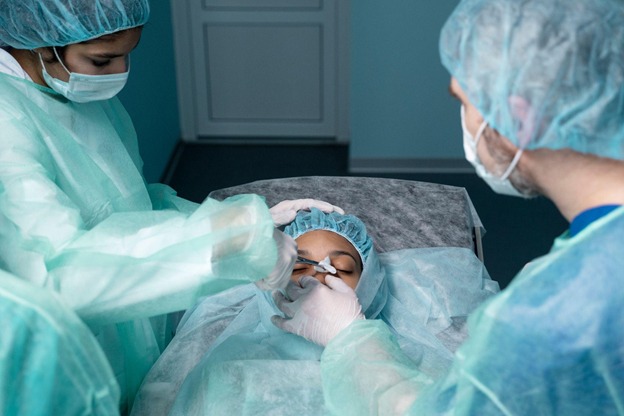
Blepharoplasty involves the surgical removal or repositioning of excess skin, fat or other tissues around the eyelids.
The procedure may be performed on the upper eyelids, lower eyelids or both.
Whether surgery is considered cosmetic or medically necessary depends primarily on the reason it is being performed.
Cosmetic eyelid surgery
Cosmetic blepharoplasty is intended to improve the appearance of the eyelids.
Patients may request surgery to address concerns such as:
- Loose or creased upper eyelid skin.
- Under-eye bags and puffiness.
- Age-related changes around the eyes.
- A tired or heavy-looking appearance.
- Excess skin that affects facial appearance without significantly interfering with vision.
Because these concerns are primarily aesthetic, cosmetic blepharoplasty is generally excluded from standard medical scheme benefits.
This means patients are usually responsible for the full surgical cost.
Functional eyelid surgery
Functional eyelid surgery is performed to address a medical or anatomical problem affecting normal eyelid function or vision.
One example is significant upper eyelid skin redundancy, known as dermatochalasis, where excess skin hangs over the eyelid margin and may obstruct the upper visual field.
Another condition is ptosis, which occurs when the upper eyelid sits abnormally low because of problems involving the muscles or structures responsible for lifting it.
Ptosis repair and upper blepharoplasty are not necessarily the same operation, although they may sometimes be performed together.
Where these conditions cause demonstrable functional impairment, surgery may be considered medically necessary.
However, not every patient with drooping eyelids will qualify for funding.
The degree of impairment, clinical findings and medical scheme requirements are important considerations.
When Can Medical Aid Cover Eyelid Surgery?
Medical aid coverage for blepharoplasty may be considered when the procedure is required to correct a documented functional problem rather than solely improve appearance.
One of the most commonly assessed situations involves excess upper eyelid tissue obstructing part of the patient’s visual field.
Restricted peripheral vision
In certain patients, substantial upper eyelid skin folds can interfere with the upper or outer visual field.
This may make activities such as reading, driving or performing everyday tasks more difficult.
An eye specialist may conduct visual field testing to assess whether the eyelid position affects the patient’s range of vision.
The results can help provide objective evidence supporting the medical necessity of surgery.
Significant upper eyelid ptosis
Ptosis occurs when the upper eyelid margin droops abnormally.
In more pronounced cases, the eyelid may partially cover the pupil and interfere with vision.
Treatment may involve repairing or adjusting the structures responsible for lifting the eyelid rather than simply removing excess skin.
Where clinically significant visual obstruction is demonstrated, the medical scheme may consider funding an appropriate corrective procedure.
Selected reconstructive conditions
Eyelid surgery may also be necessary following trauma, tumour removal or other medical conditions affecting eyelid function.
In these circumstances, surgery may be required to restore eyelid closure, protect the eye or correct an anatomical defect.
Funding depends on the diagnosis, the treatment proposed and the applicable benefits.
For patients investigating functional eyelid surgery medical aid, it is important to understand that eligibility is determined by the specific medical circumstances.
Lower blepharoplasty performed for under-eye bags is generally regarded as cosmetic and is therefore unlikely to qualify for routine medical scheme funding.
Where reconstructive eyelid treatment is needed because of injury or disease, different benefit considerations may apply.
What Factors Affect Medical Aid Approval for Eyelid Surgery?
Medical schemes assess several factors before deciding whether to authorise an eyelid procedure.
Although the requirements vary between schemes and benefit options, certain considerations are particularly relevant.
Medical necessity
The scheme may require evidence that the procedure is necessary to correct a functional abnormality.
Excess eyelid skin alone does not automatically establish medical necessity.
The clinical assessment should explain how the condition affects vision or another important aspect of eyelid function.
Objective visual impairment
When eyelid surgery affecting vision is being considered, a formal visual field examination may help demonstrate whether the upper eyelids obstruct part of the visual field.
Some schemes may request testing under specific conditions or require particular findings before evaluating the application.
A test result does not guarantee approval, but it may provide important supporting evidence.
Specialist assessment
A report from an appropriately qualified specialist may be required.
Depending on the condition, assessment may involve an ophthalmologist, oculoplastic surgeon or another surgeon with appropriate expertise in eyelid procedures.
The specialist may document the diagnosis, physical findings, functional limitations and recommended treatment.
Clinical photographs
Clear photographs showing the position of the eyelids may be requested to support the application.
Images can help demonstrate excess skin, drooping eyelids or other structural concerns.
However, photographs alone may not be sufficient to establish functional impairment.
Medical scheme rules
Different medical schemes have different benefit structures, exclusions and authorisation criteria.
Even patients belonging to the same scheme may have different benefits depending on their specific plan.
The scheme may also apply designated service provider requirements, procedure-specific rules or other managed-care conditions.
Prescribed Minimum Benefits
South Africa’s Prescribed Minimum Benefits (PMBs) provide legally required cover for specified conditions and treatments.
However, cosmetic eyelid surgery does not automatically qualify as a PMB.
When an eyelid condition falls within an applicable PMB diagnosis and treatment framework, the scheme must apply the relevant regulatory requirements.
Each case needs to be assessed according to its diagnosis and clinical circumstances.
How to Check Medical Aid Coverage Before Eyelid Surgery
Patients should investigate their medical aid benefits before confirming a theatre booking.
The first step is to contact the medical scheme and explain the nature of the proposed eyelid procedure.
It is important to distinguish between cosmetic blepharoplasty, functional upper eyelid surgery and ptosis repair because these may have different authorisation requirements.
Patients can then ask whether their benefit option provides cover for the specific procedure when medical necessity is demonstrated.
The scheme may require diagnostic codes, procedure codes and information about the treating specialist.
A formal quotation from the surgical practice may also be necessary.
Eyelid surgery pre-authorisation refers to the process through which the medical scheme reviews the proposed procedure before treatment takes place.
During this process, the scheme may request additional documents or clinical evidence.
Patients should confirm whether separate authorisation is required for the hospital or day surgery facility, surgeon and anaesthetist.
It is also important to establish whether the scheme will cover the full amount charged or only a portion.
A procedure may receive authorisation while still leaving the patient responsible for co-payments, tariff shortfalls or excluded services.
Patients should request written confirmation of the scheme’s decision, rather than relying solely on information provided during a telephone conversation.
Where authorisation is declined, the patient can request the reason for the decision and ask whether a reconsideration or appeal process is available.
What Documents May Be Required for Medical Aid Approval?
When applying for funding, the medical scheme may request supporting documents to establish the clinical basis for the operation.
The exact documentation will depend on the scheme and the patient’s condition.
Specialist medical report
A detailed medical report may include the patient’s diagnosis, symptoms, examination findings and the reason surgery has been recommended.
The report should clearly distinguish between functional concerns and cosmetic preferences.
Visual field test results
Where the eyelid condition affects vision, formal visual field testing may be requested.
This examination can help assess the extent of obstruction associated with the eyelid position.
Clinical photographs
Photographs may be needed to demonstrate excess skin, drooping eyelids or relevant anatomical features.
These should accurately reflect the patient’s condition and meet the scheme’s documentation requirements.
Procedure and diagnostic codes
Medical schemes generally use recognised coding systems to evaluate the proposed treatment.
The treating practice may provide the relevant diagnostic and procedural information.
Surgical quotation
A detailed quotation can outline the surgeon’s fees, anaesthetic charges, theatre expenses and other anticipated costs.
This helps the scheme evaluate the financial aspects of the application.
Additional supporting information
Some schemes may require evidence of previous treatment, relevant medical investigations or further specialist opinions.
Patients should submit complete and accurate documentation to avoid unnecessary administrative delays.
However, even a comprehensive application does not guarantee approval, as the final decision depends on the medical scheme’s clinical criteria and applicable rules.
What Are Your Options If Medical Aid Does Not Cover Eyelid Surgery?
A medical aid rejection does not necessarily mean that eyelid surgery cannot be performed.
It means that the scheme has declined funding under the circumstances assessed.
The next step depends on whether the procedure is medically necessary, cosmetic or a combination of both.
Request clarification from the medical scheme
Patients should obtain a written explanation for the declined application.
The decision may relate to insufficient clinical evidence, benefit exclusions, coding discrepancies or other scheme requirements.
Understanding the reason is important before deciding whether further action is appropriate.
Discuss additional evidence with the specialist
If the procedure is required for genuine functional impairment, the specialist may be able to provide further clinical information supporting the application.
An appeal may be appropriate where the medical evidence has not been fully considered or where the patient believes the scheme’s decision is inconsistent with its rules.
Patients can use the scheme’s internal complaints process and, where appropriate, approach the Council for Medical Schemes.
Consider self-funded treatment
When surgery is classified as cosmetic, patients should generally expect to pay privately.
Understanding cosmetic eyelid surgery costs is therefore an important part of planning.
The cost of blepharoplasty varies according to the surgical technique, whether the upper or lower eyelids are treated, the complexity of the procedure and the facility used.
Patients should request a written quotation that clearly explains the fees involved.
This may include the surgeon, anaesthetist, theatre charges and any separately billed postoperative services.
Ask about payment arrangements
Patients considering private treatment should establish the practice’s payment requirements before confirming surgery.
Some practices may require a deposit followed by payment of the balance before the operation.
Independent financing may be available through external credit providers, subject to their terms and eligibility requirements.
Patients should avoid assuming that every surgical practice provides instalment plans or financing.
Consider whether surgery is appropriate at the present time
For patients whose concerns are purely cosmetic, there is generally no medical urgency to undergo blepharoplasty.
Taking additional time to research the procedure, understand recovery requirements and prepare financially may be beneficial.
However, patients experiencing genuine functional visual difficulties should discuss appropriate treatment with their specialist rather than postponing medically necessary assessment solely because of uncertainty about funding.
Conclusion
Medical aid funding for eyelid surgery in South Africa depends largely on the purpose of the procedure and whether a clinically significant functional problem can be demonstrated.
Cosmetic upper or lower blepharoplasty is generally excluded from routine medical scheme benefits.
However, selected cases involving impaired vision, significant ptosis or medically necessary reconstructive surgery may qualify for consideration under the relevant scheme rules.
Patients researching Medical aid for eyelid surgery South Africa should establish their eligibility before making financial or surgical commitments.
An appropriate specialist assessment, supporting medical documentation and written pre-authorisation decision can help clarify the extent of available benefits.
At YourEyelids, patients can arrange a consultation to discuss their eyelid concerns, obtain an individualised assessment and establish whether their procedure is likely to be considered cosmetic or functional.
Understanding the distinction allows patients to approach surgery with realistic expectations about both the treatment and the potential financial responsibilities involved.